What You Can and Cannot Patent?
Updated:
READ:
14 min.


Patents cover new, inventive, and industrially applicable inventions, many ideas and creations fall outside patent eligibility and require alternative protections like copyrights, trademarks, or trade secrets.
In the UK, patents are granted by the UKIPO (UK Intellectual Property Office) under the Patents Act 1977. To be patentable, an invention must be novel, involve an inventive step, and be industrially applicable. Patent protection lasts up to 20 years.
The total official fees for a standard UK patent application (filing + search + examination) are £405 from 1 April 2026 (learn more about patent forms and fees). Abstract ideas, business methods, software as such, and anything already in the public domain cannot be patented. Understanding these boundaries is essential for protecting your intellectual property effectively.
This table categorizes common topics by whether they are patentable, under what conditions, and suggests better alternative protections such as copyright, trademark, or trade secret when patents are not applicable.
| Topic | Patentable? | When it can be patentable | Better alternative (copyright/trademark/trade secret) |
| Recipe | No | Novel technical food process may be patentable | Trade secret |
| Software | Sometimes | Novel technical solution is required | Copyright, Trade secret |
| App idea | No | If includes technical invention | Copyright, Trademark |
| Business idea | No | If tied to novel technical invention | Trade secret, Trademark |
| Food | Sometimes | Novel composition or processing method | Trade secret |
| Algorithm | Sometimes | Part of technical invention | Copyright, Trade secret |
| Code | Sometimes | If part of inventive technical process | Copyright, Trade secret |
| Fashion design | No | Not patentable | Design rights, Copyright |
| Something that already exists | No | Unless novel improvement | Trade secret, Other IP protections |
| A color | No | N/A | Trademark |
| Game mechanics | No | Technical implementation may be patentable | Copyright, Trademark |
| A process | Sometimes | Must be new, inventive, and industrially applicable | Trade secret |
| An idea without a product | No | Must have detailed enabling disclosure | Copyright, Trade secret, NDAs |
| An educational process | No | Technical aspect required | Copyright, Trade secret |
| A logo | No | N/A | Trademark, sometimes Copyright |
Recipes in their traditional form-such as a list of ingredients combined with standard culinary steps-are generally not patentable. Under most legal frameworks, a simple list of ingredients or an ordinary cooking technique is considered a mere scheme, presentation of information, or an obvious combination of known elements.
However, patent offices can grant protection if a food creation goes beyond basic cooking and demonstrates a genuine technical character or industrial applicability.
| Not patentable | Potentially patentable |
| Everyday recipes | Technical food processes |
| Mixing known ingredients | Novel shelf-life methods |
| Flavor combinations | Chemical structural shifts |
Software as such is usually not patentable when claimed merely as a set of instructions, a computer program, or abstract mathematical algorithms. Under standard intellectual property frameworks, pure code is considered literary expression rather than a technical invention.
However, software can cross the threshold into patentability if it provides a novel, technical solution to a specific technical problem, producing a “further technical effect.”
| Not patentable | Potentially patentable |
| Computer programs *per se | Technical control systems |
| Abstract algorithms | Novel hardware integration |
| Business methods/rules | Improved data processing |
An app idea alone cannot be patented because legal frameworks do not protect abstract concepts, high-level business ideas, or simple functional features without a underlying technical mechanism.
To cross the boundary into patentability, an app must go beyond a mental concept or standard user interface workflow: it must involve a novel, non-obvious technical implementation that solves a specific technical problem.
| Not patentable | Potentially patentable |
| Pure app ideas / concepts | Novel technical architecture |
| Business / matchmaking rules | Unique data compression methods |
| Standart UI layout / flow | Hardware-integrated features |
Business ideas and commercial schemes are generally not patentable in their raw form. Intellectual property law views business models, marketing strategies, and monetization plans as abstract concepts, commercial instructions, or mental acts rather than technical inventions.
However, if a business method relies on a genuinely novel technical implementation-such as a non-obvious software infrastructure, specialized machine, or unique cryptographic process-the underlying technical system may qualify for patent protection.
| Not patentable | Potentially patentable |
| Abstract business models | Novel technical apparatus |
| Marketing strategies | Proprietary data networks |
| Financial schemes / plans | Non-obvious hardware tools |
Food products themselves are generally not patentable if they consist of ordinary combinations of edible ingredients prepared using standard culinary practices.
However, novel food processing techniques, chemical compositions, or functional food formulations can qualify if they deliver a verifiable technical effect.
| Not patentable | Potentially patentable |
| Basic ingredient blends | Shelf-life extending tech |
| Routine culinary dishes | Novel texture processing |
| Flavor combinations | Functional bio-compounds |
Algorithms as abstract mathematical concepts or pure logic formulas are not patentable.
However, when an algorithm is tied to a practical, technical application-producing a real-world technical outcome-it may qualify for patent protection.
| Not patentable | Potentially patentable |
| Pure math equations | Signal processing logic |
| Abstract logical formulas | Data encryption methods |
| Mental calculation steps | Autonomous control systems |
Software code itself is not patentable as a literary work. Code in its written state is protected under copyright law automatically.
However, the underlying technical process or system implemented by the code may be patentable if it solves a technical problem in a novel way. Explore our online copyright protection services for digital products.
| Not patentable | Potentially patentable |
| Written source code | Novel system architectures |
| Scripting syntax | Hardware resource optimization |
| Standart API calls | Embedded device control |
You cannot patent something that already exists because all patent systems strictly require absolute novelty.
However, if you develop a genuinely new and non-obvious improvement or discover a novel technical use for an existing substance or device, that specific aspect may be patentable.
| Not patentable | Potentially patentable |
| Unchanged prior art | Novel structural upgrades |
| Known public devices | New medical uses of known substances |
| Obvious modifications |
Colors themselves are generally not patentable. However, they can be protected as trademarks in specific contexts, such as when used to identify and distinguish products or services. For example, the color pink for insulation materials is trademarked in some jurisdictions. Learn how to secure your brand marks with trademark registration.
Game mechanics as abstract rules are generally not patentable. However, specific technical implementations of game mechanics may be patentable. Copyright and trademarks often protect the branding and expressive elements related to games.
Yes, processes are classic patentable subject matter, provided they are novel, non-obvious, industrially applicable, and non-abstract.
Eligible processes include manufacturing methods, chemical synthesis, electronic data treatments, and industrial treatments.
| Not patentable | Potentially patentable |
| Mental calculation steps | Chemical synthesis steps |
| Business workflow steps | Industrial manufactoring |
| Surgical/treatment steps | Data transformation tech |
Yes, a physical prototype or manufactured product is not required to file or secure a patent.
However, you cannot patent a raw concept. You must provide a clear, technical description that fully enables a person skilled in the art to replicate the invention without undue experimentation.
| Not patentable | Potentially patentable |
| Vague concepts/dreams | Fully enabled technical blueprints and schemas |
| Incomplete theories | Detailed executions specs |
| Unresolved wish-lists |
Educational processes are generally not patentable as they are considered abstract methods. However, if the process includes a novel technical aspect, patent protection may be possible. Otherwise, copyright or trade secrets may be better alternatives.
Logos are generally not patentable but are protected by trademarks, which safeguard brand identity. Copyright may protect the artistic elements of a logo, but trademark registration is the primary protection method. Discover why a word mark trademark is essential for protecting your brand name.
At Metida, we help clients navigate complex intellectual property landscapes by tailoring strategies to their specific industry needs. Whether you are launching software, branding a business, or launching a new product, our team combines patents, copyrights, trademarks, and trade secrets to ensure complete protection. Explore our full range of IP legal services.
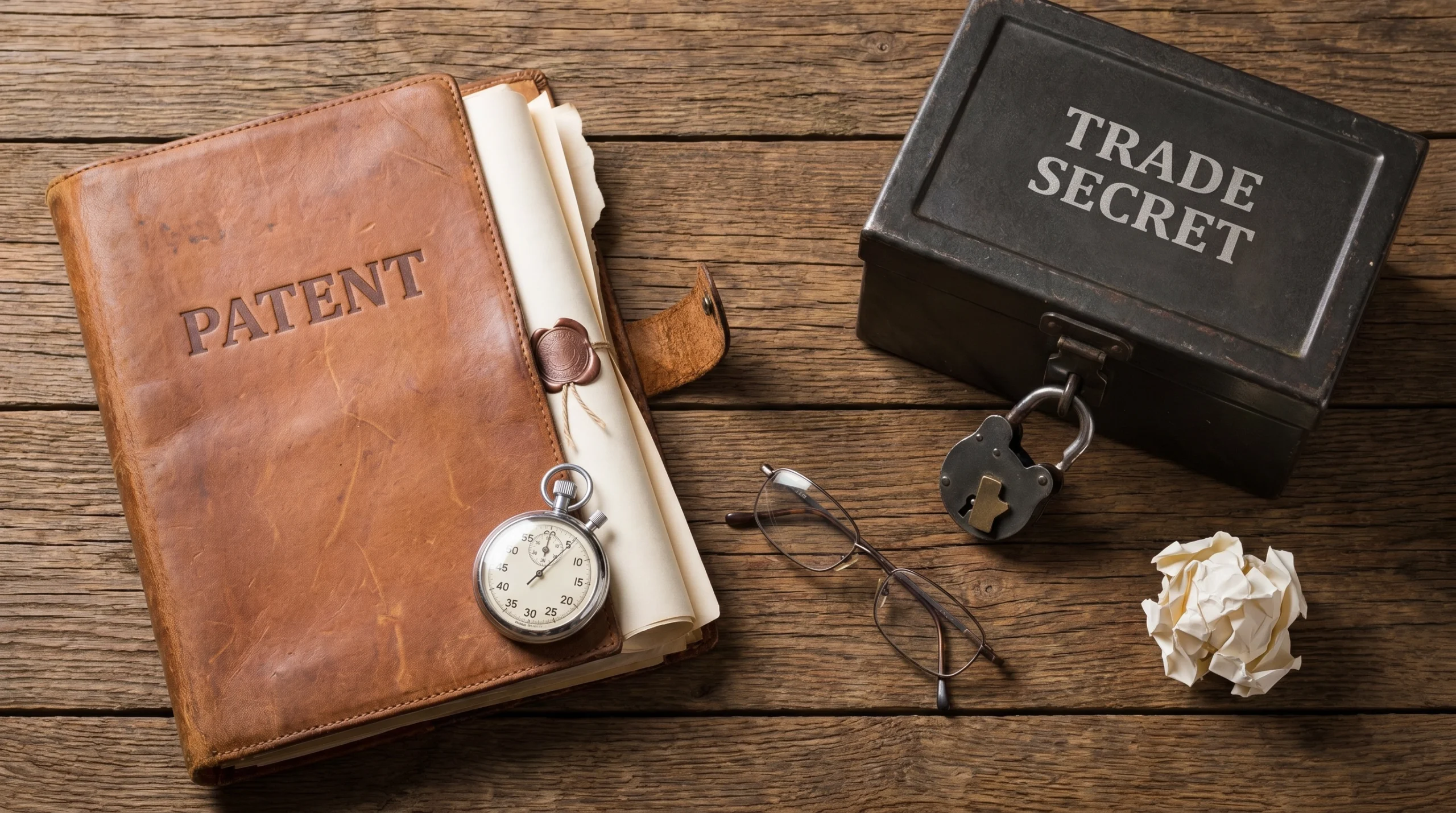
Trade secrets cannot be patented. They protect confidential business information indefinitely as long as secrecy is maintained. Patents require public disclosure and provide exclusive rights for a limited time, typically 20 years.
You can patent inventions that are new, inventive, and industrially applicable. You cannot patent abstract ideas, business methods, logos, or things already publicly known. Each category has exceptions based on technical details. For an in-depth breakdown, read the ultimate guide to patents.
Generally, you cannot have both for the same invention because patents require public disclosure, while trade secrets require confidentiality. However, different aspects of a product may be protected by each method. Learn more in our article on patent vs trade secret: what is the difference?
Trade secrets have no registration costs and can last indefinitely if kept confidential, making them potentially cheaper than patents, which involve application fees and maintenance costs.
Navigating what you can and cannot paten is critical for protecting your innovations and business assets. Contact our team at Metida to secure your creations effectively and confidently.
Filing fees directly with official patent offices are relatively modest (typically £60–£300 for basic UKIPO fees, or around €1,500–€3,000 in official EPO fees). However, because drafting claims to clear technical exclusions requires legal expertise, total costs including specialized patent attorney fees generally range from £3,000 to £6,000+ for a national UK patent, and €6,000 to €12,000+ for a European patent across multiple jurisdictions.
The timeline from initial filing to grant typically ranges between 2 to 5 years. The process involves formal examination, a public search report to check for prior art, and responding to official objections raised by UKIPO or EPO examiners regarding novelty and technical character.