Intellectual Property Violations: Risks, Prevention, and Legal Help
Updated:
READ:
10 min.


Intellectual property violations can damage a business’s value, reputation, and future by exposing confidential ideas or allowing others to misuse your creations. Companies can avoid most risks by registering their IP, locking down data access, training staff, and acting quickly when a problem appears.
| Topic | Key Insight | Why It Matters | Action Item |
|---|---|---|---|
| IP Infringement | Unapproved use of protected work or ideas hurts businesses | Causes lost profits and weakens your brand | Register IP assets and monitor for misuse |
| Top IP Leakage Risks | Employee errors, poor security, outsiders, and weak training | Most leaks can be prevented | Train staff, limit access, and review security often |
| Consequences of Violations | Legal, financial, and reputational damage can be severe | Can ruin a business fast | Act early to stop and address issues |
| Prevention Tactics | Register IP, use NDAs, control access, and audit systems | Reduces risk of theft and accidental leaks | Set up controls, agreements, and regular auditing |
| Response Steps | Quick action and evidence gathering limit damage | Delays increase business risks | Prepare a clear response plan for incidents |
| When to Seek Expertise | Complex or international cases need professional help | Fixes problems better than DIY | Find IP experts if a problem is big or ongoing |
Intellectual property violations threaten business value, reputation, and growth. IP leakage-when proprietary information slips into the wrong hands-can create instant crises that are hard to fix. Business owners, creators, and managers need a practical guide to defend their ideas, protect assets, and respond swiftly when problems arise. In this article, I explain what is intellectual property infringement, highlight the top 13 risks of intellectual property leakage, and outline real steps for IP protection and enforcement. My aim: help you avoid disaster, act fast when trouble hits, and feel confident about your next move.
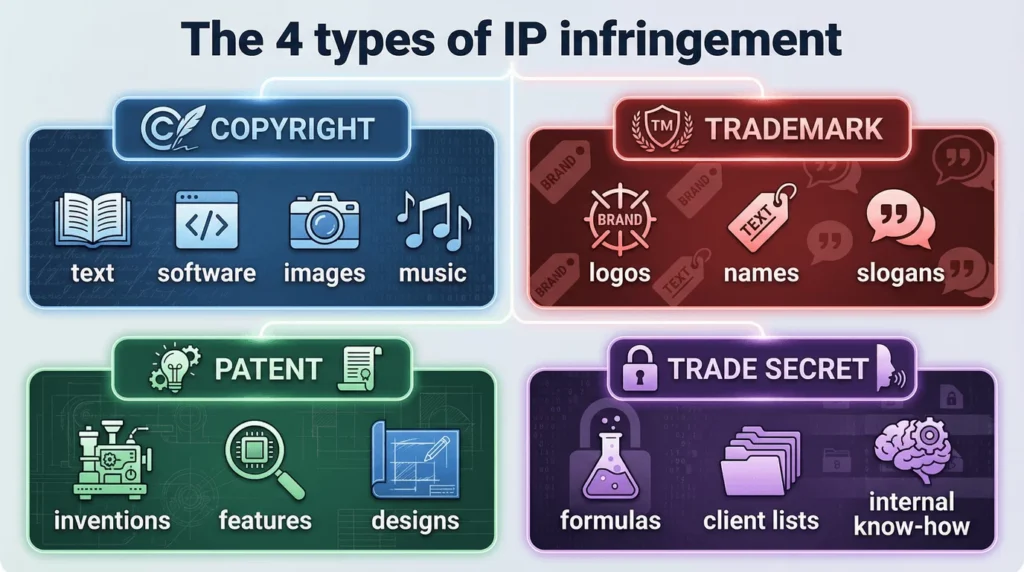
Intellectual property violations occur when someone uses your protected inventions, creations, or confidential information without permission. These violations can involve copyrights, trademarks, patents, trade secrets, and designs. For example, a competitor copying your logo, a supplier leaking product plans, or unauthorized use of your software.
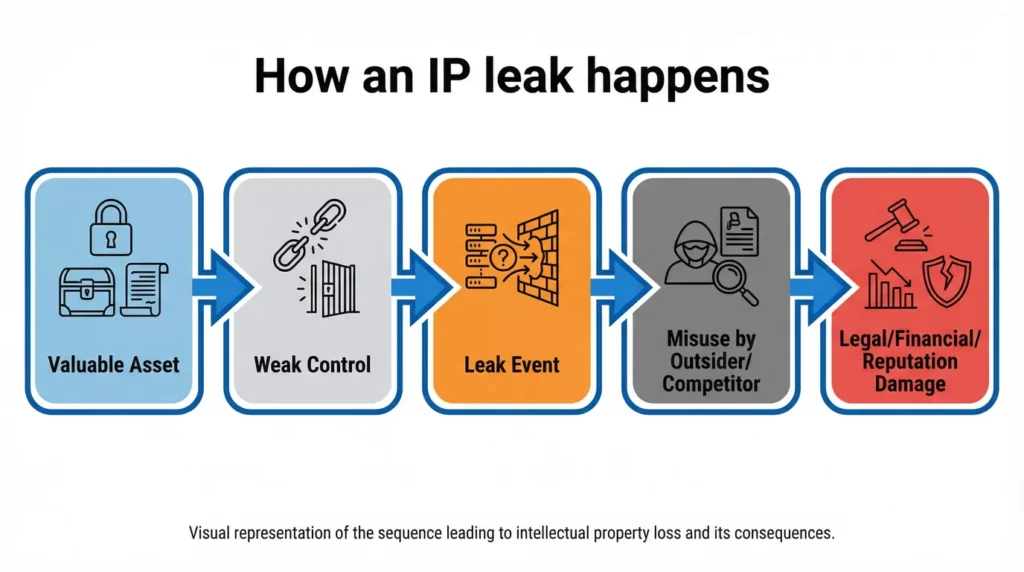
Why does this matter? IP drives value and trust. If leakage or theft occurs, you risk losing competitive advantage, customer loyalty, and vital profits. We often see smart businesses run into trouble because their staff, partners, or IT systems are not as secure as they think. Intellectual property leakage can happen in a flash-sometimes through a single careless email or an unguarded conversation at a trade show.
The bottom line: If you own or create valuable information, even one IP violation can set you back years.
Intellectual property infringement means someone is using, copying, or distributing protected material without permission. Each type of IP has its own rules, but the result is similar: your rights are ignored and your assets are misused.
If you’ve built something valuable, protecting these rights is not optional-it’s business survival. And if you’re unsure whether a situation is a violation, the stakes are too high to guess.
Intellectual property leakage can happen in dozens of ways. Every company faces these threats. Here’s your checklist of the top 13 risks:
1. Unauthorized employee sharing of confidential files
Staff take files home, send them to personal emails, or share with friends, sometimes by accident.
2. Suppliers or partners disclosing sensitive designs
Trusted partners can slip up, or intentionally leak your information to others.
3. Counterfeit goods entering the market
Fakes copy your product, undercut your price, and damage your brand.
4. Loss of patent protection through public disclosure
Discussing inventions publicly before filing patents can void your rights.
5. Weak access controls (digital and physical)
Poor passwords, unlocked offices, or outdated IT make leaks likely.
6. Use of pirated or unlicensed software/material
Staff may use unapproved source code, images, or tools, breaching IP rights.
7. Outsourced vendors mishandling IP
Contractors might not understand or care about your need for secrecy.
8. Insecure cloud or IT infrastructure
Hackers target weak digital systems to steal blueprints and plans.
9. Phishing or cybercrime targeting IP
Fraudsters trick employees into giving away credentials or confidential info.
10. Breach of NDAs (Non-Disclosure Agreements)
Someone ignores or misunderstands the legal agreements meant to protect your IP.
11. Social engineering or insider theft
Staff or visitors manipulate, steal, or copy vital company data.
12. Negligent sharing at industry events or online
Loose talk or bragging on social media can spread trade secrets far and wide.
13. Inadequate training and awareness among staff
If your team doesn’t know the rules, mistakes (and leaks) are a matter of time.
The good news? Most companies can prevent over half these risks with the right steps. We help spot weaknesses and build stronger controls before trouble starts.
Worried your organization may be at risk? Start with this simple checklist. Answer “yes” or “no” as you go.
If you answered “no” to any, your business could be exposed to intellectual property leakage and IP violations right now.
Download the checklist if you want to do the self-audit later on.
Copyright, trademark, patent, and trade secret infringement take many forms. Here’s what businesses actually face:
Intellectual property violations can be accidental (careless) or deliberate. Either way, your business suffers.
The fallout from IP violations cuts deep:
Civil remedies include cease-and-desist letters, claims for lost profits, or court-ordered damages Mandour Law. In criminal cases-like counterfeiting or trade secret theft-the penalties can involve fines or jail time.
Worst-case: Your company loses exclusivity or the right to operate certain products at all.
Every company can reduce intellectual property leakage and violations with basic habits and tools. Here’s what we teach at Metida:
We recently advised a tech client to lock down old internal servers before hiring an outside design firm. The practical result? Leaks stopped, and legal exposure dropped to almost zero.
If you suspect an intellectual property violation, act quickly-every hour counts. Here’s what works:
1. Assess: Confirm the facts. Is IP really being misused, or is it a false alarm?
2. Gather Evidence: Screenshots, emails, contracts, anything that shows what happened.
3. Secure Data: Change passwords, block access, and prevent further leaks.
4. Notify: Tell key stakeholders (leadership, IT, legal) what’s up.
5. Take Legal Steps: Send a cease-and-desist, file a takedown, or alert authorities as needed.
6. Decide on Proceedings: Civil action (lawsuit) or, for serious cases, criminal reporting.
7. Tighten Controls: Review how the leak happened so it doesn’t occur again.
8. Consult IP Pros: Bring in experts to help fix damage and plan next steps.
We see companies react too late because no one owned the crisis. Take action-even if you’re uncertain-and fix the gaps with expert help.
Sometimes, IP issues are too complex for a simple fix:
That’s when you want hands-on guidance from someone who’s seen it all. Our decades of regional and international experience mean we know how to untangle tough cases and protect your best interests.
Copyright infringement, trademark infringement, patent infringement, and trade secret misappropriation are the most frequent. These happen when others use, copy, or distribute your material without approval.
Look for unauthorized use, similar products on sale, or competitors using your brand name or logo. Regular monitoring and IP registration help you spot violations early.
Gather evidence, confirm your IP registrations, send a cease-and-desist letter, report the infringement to relevant sites or authorities, and speak to an IP lawyer.
You could lose your competitive edge, suffer revenue loss, harm your brand, face more competition, and struggle with legal or investment issues.
Register your IP, use confidentiality agreements, teach employees the rules, monitor for misuse, and act on violations. Don’t be afraid to get legal help.
Intellectual property violations aren’t just legal hassles-they’re existential threats. The best safeguard is experience, vigilance, and professional partnership. We’ve helped hundreds of clients avoid disasters before they started and recover quickly when things went wrong.
Think you’re exposed or worried about intellectual property leakage? Don’t wait until after a crisis. Let us help you with a tailored IP protection and enforcement plan-reach out for a free initial consultation or download our practical IP risk checklist.
Stay secure, act early, and put expertise on your side. Your ideas are worth it.
*For more on intellectual property violations, see Mandour Law overview and The Myers Law Group summary. For hands-on help, contact Metida today.*