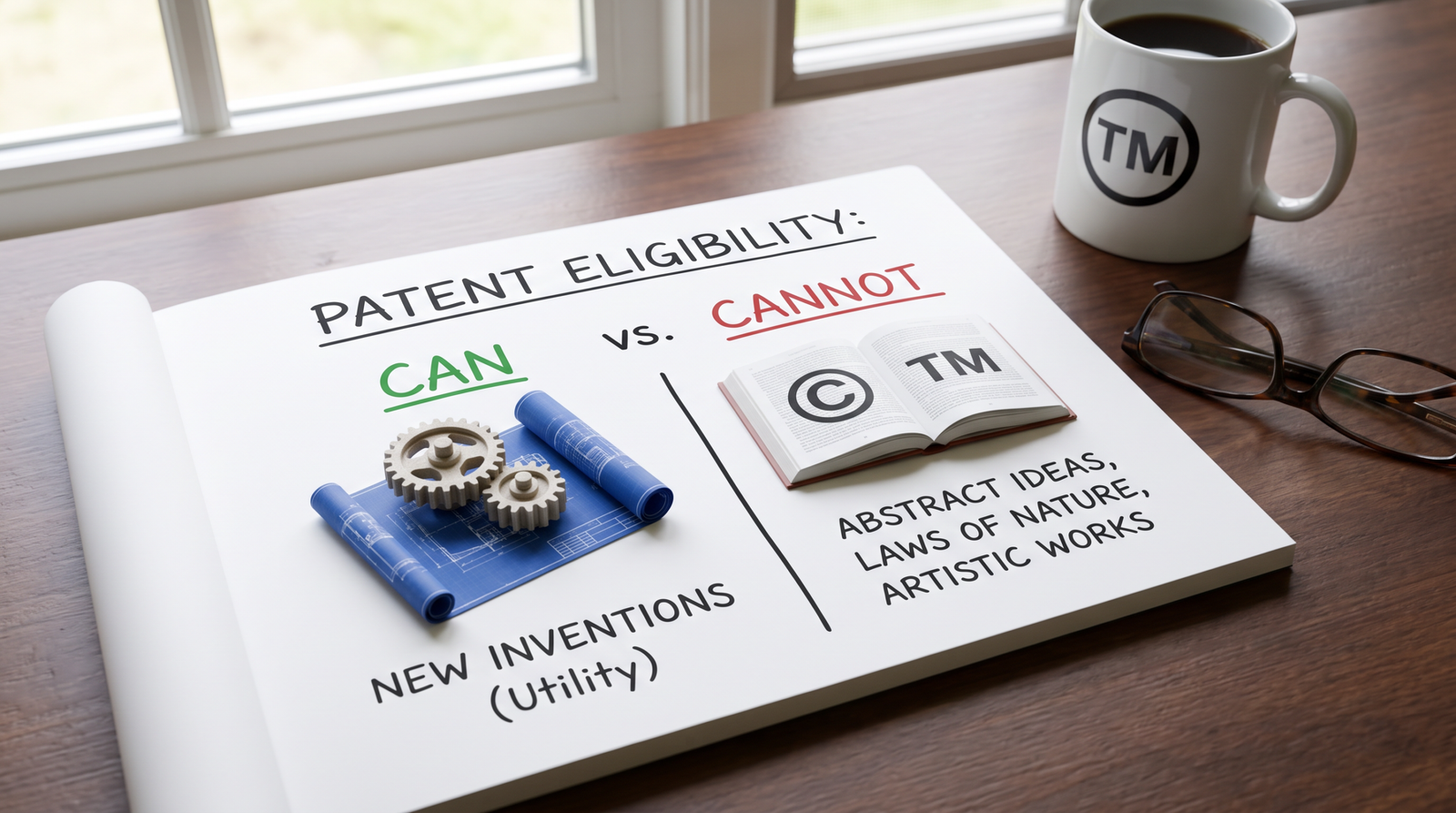
AI and Modern IP Law
Updated:
READ:
12 min.


To navigate this paradigm shift, executive teams must execute five interconnected strategic directives across all operating business units.
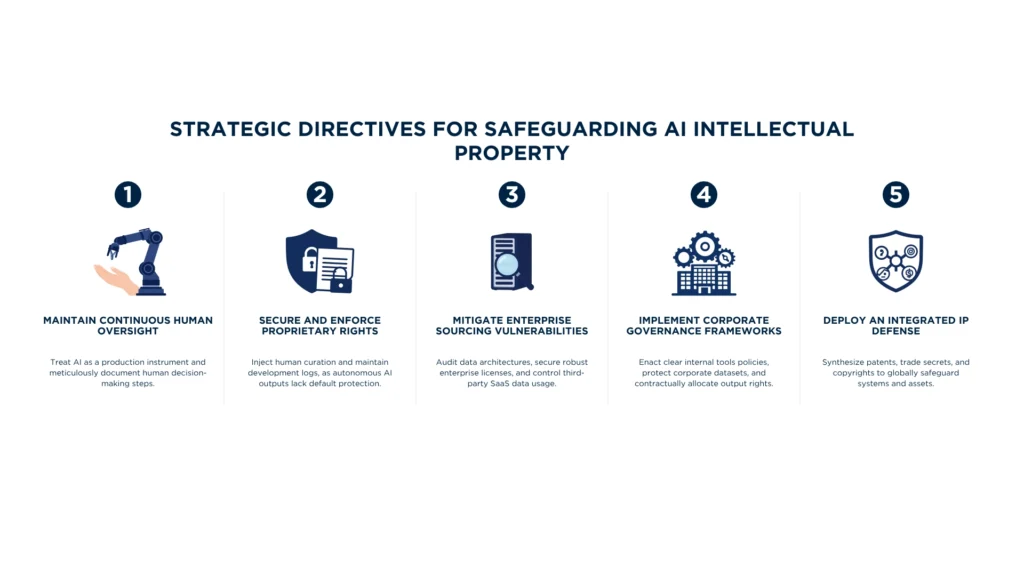
Statutory copyright protection extends exclusively to products of human creativity, systematically excluding fully automated generative outputs. This reality strikes at the heart of modern corporate valuation, which increasingly relies on digital asset generation. If a machine creates the asset, the asset remains unprotectable, immediately entering the public domain.
In the European Union, the test is framed differently but yields a similar operational mandate: copyright protects a work only if it is the author’s “own intellectual creation” (CJEU, Infopaq, C-5/08), and there is no open-ended fair use defense, only a closed list of statutory exceptions (Directive 2001/29/EC). For European companies and global entities operating within the EU, documented human authorship is therefore what determines whether an AI-assisted asset can be protected at all.
Core commercial assets relying solely on machine execution face systematic non-protectability. Competitors can replicate, distribute, and monetize these exact same assets with complete legal impunity. This legal gap fundamentally undermines corporate valuation, dilutes brand differentiation, and destroys R&D return on investment.
Navigating the landscape of artificial intelligence intellectual property requires a complete reevaluation of traditional risk management paradigms. The legal challenge stems from a dual-threat vector: protecting your own creations while avoiding the infringement of third-party assets. Companies must recognize that current legal frameworks are ill-equipped to handle the scale and speed of machine output.
The primary operational risk resides in the data ingestion phase where algorithms train on massive datasets. If these datasets contain protected works without proper licensing or fail to respect regional copyright opt-outs, the downstream commercial models become legally toxic. This exposure means that an enterprise could see its custom models decommissioned by court order, erasing millions in capital investment.
To protect enterprise value, legal departments must institute mandatory provenance tracking for all proprietary software and creative assets. This involves deploying automated monitoring tools that log the precise ratio of human-to-machine contribution across development cycles. By maintaining clear records, counsel can confidently defend the copyrightability of enterprise products during due diligence or litigation.
Ultimately, managing artificial intelligence intellectual property demands that executive leadership bridge the gap between technical teams and legal counsel. Engineers focus on optimization and speed, often overlooking the copyright status of training inputs or the terms of open-source repositories. Establishing a cross-functional AI Governance Committee ensures that technical acceleration is balanced with ironclad asset protection.
The rapidly evolving field of LLM intellectual property law presents unprecedented operational questions regarding fair use and text mining. Large Language Models (LLMs) rely on consuming massive corpora of text, code, and media to learn complex semantic patterns. However, extracting value from copyrighted expressions without explicit authorization has triggered a wave of high-stakes corporate litigation.
Under contemporary US legal interpretations, the defense of “transformative fair use” is being tested to its absolute limits. While technology providers argue that copying text to analyze statistical relationships is non-infringing, content owners claim systematic commercial exploitation.
In the European Union, the regulatory environment is far more explicit. The EU Copyright Directive (Articles 3 and 4) provides specific exceptions for Text and Data Mining (TDM), but crucially allows rights holders to expressly “opt-out” of having their content used for commercial AI training. Furthermore, the EU AI Act of 2026 mandates severe transparency requirements, forcing AI providers to publish detailed summaries of their training datasets and prove compliance with these copyright reservations.
To insulate the enterprise from shifting global liabilities, organizations must follow three strict protocols:
A globally uniform technical architecture that fails to account for regional variances-such as relying on US Fair Use while ignoring the EU’s strict transparency and opt-out regimes-risks severe compliance penalties and asset invalidation.
As enterprises integrate commercial APIs, understanding the nuances of AI platform intellectual property policies becomes a strategic necessity. Commercial platforms offer highly powerful tools, but their standard terms of service can present significant risks to corporate data security. Executives must look past marketing promises and scrutinize the underlying data-use agreements that govern enterprise API endpoints.
A primary risk is the accidental exposure of corporate trade secrets or proprietary source code through employee interaction with public interfaces. When non-cleared personnel input sensitive information into public prompts, that data may be analyzed, retained, or utilized for model refinement. This transmission can legally destroy the “reasonable efforts to maintain secrecy” required to preserve trade secret protection.
In the European Union, two instruments apply at once: the GDPR (Regulation (EU) 2016/679) governs any personal data entered into a prompt, and the Trade Secrets Directive (Directive (EU) 2016/943) protects confidential information only where the holder took reasonable steps to keep it secret. Entering proprietary data into a public model can breach data-protection rules and destroy trade secret status at the same time.
To mitigate exposure and protect enterprise assets when leveraging external platforms, organizations must execute the following controls:
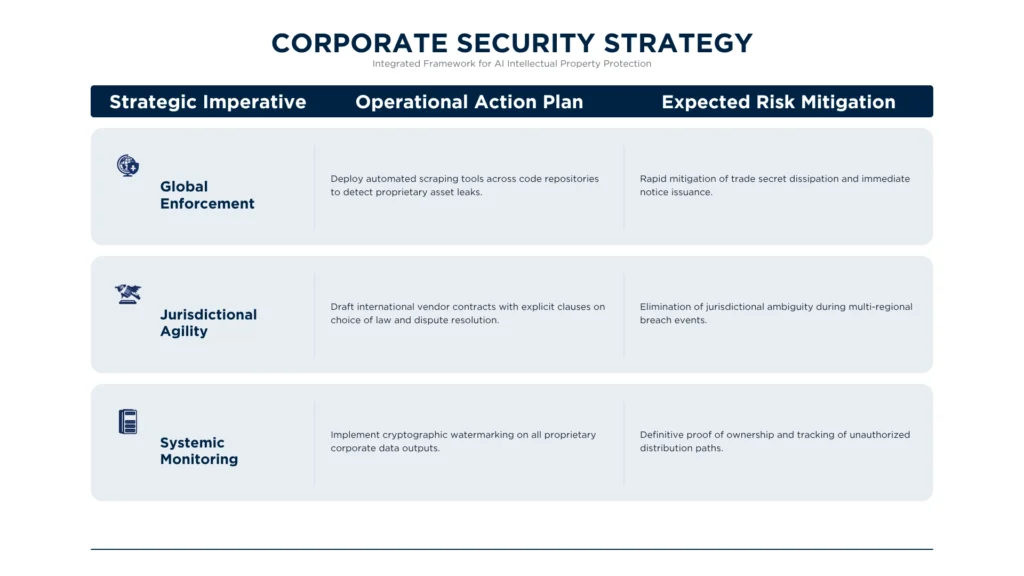
Establishing an insulated corporate tenant is only the initial step in a comprehensive defense strategy. Organizations must also conduct continuous compliance audits of external vendors to verify adherence to data deletion and isolation commitments. In the digital economy, a failure of data security at a key vendor represents a direct compromise of your own corporate capital.
The rapid globalization of technology means that safeguarding intellectual property in cyberspace requires a sophisticated, borderless defensive posture. Digital ecosystems do not respect national boundaries, allowing infringing software code, counterfeit media, and misappropriated trade secrets to propagate instantly worldwide. This borderless friction complicates asset enforcement and demands rapid, proactive countermeasures from corporate legal teams.
The intersection of decentralized networks and cloud infrastructure creates significant jurisdictional challenges for corporate rights holders. An infringing automated system may be trained in one country, hosted in a second, and distributed to end-users in a third. This distributed model requires corporate counsel to maintain agile enforcement mechanisms capable of operating across multiple legal jurisdictions simultaneously.
Effective management of intellectual property requires moving beyond reactive, post-infringement litigation toward proactive digital asset protection. Organizations must utilize automated digital threat intelligence tools to scan global code repositories, marketplaces, and model registries for unauthorized asset usage. Early detection allows companies to issue rapid takedown notices and isolate threats before they cause material market erosion.
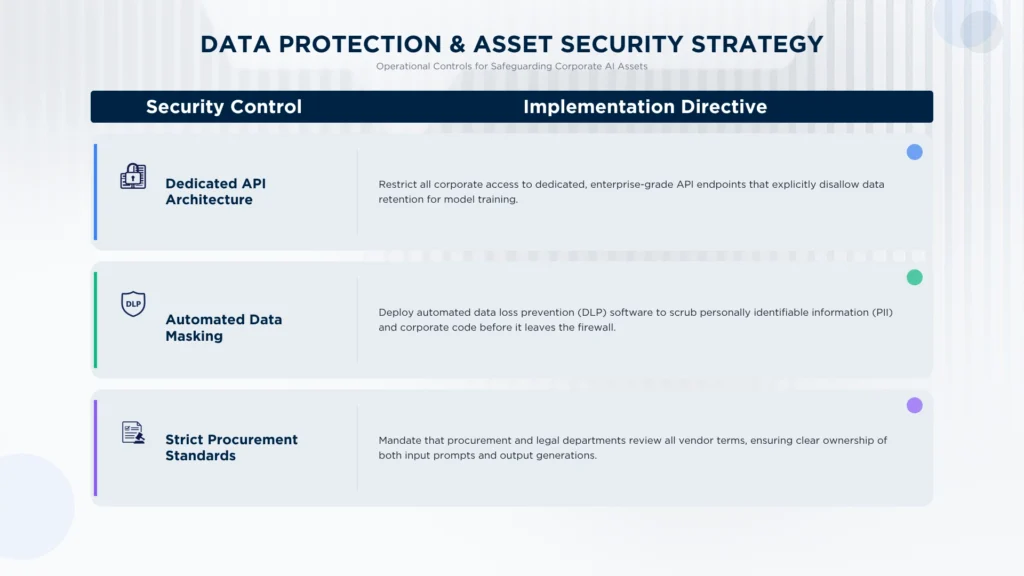
Ultimately, securing digital assets requires an integrated approach that combines advanced technological tools with rigorous contractual frameworks. By implementing cryptographic tracking, clear vendor agreements, and automated threat monitoring, enterprises can safely expand their digital footprint. Maintaining control over proprietary assets in an interconnected environment is essential to preserving long-term corporate value and market dominance.
To provide historical context and actionable guidance for executive decision-making, the following five sections detail the foundational legal precedents currently shaping the global AI and IP landscapes.
This landmark class-action litigation addresses the core legality of scraping copyrighted imagery to train generative text-to-image models. Visual artists allege that the unauthorized ingestion of billions of protected images constitutes direct and vicarious copyright infringement.
The case focuses heavily on whether the resulting models and their generated outputs should be legally classified as unauthorized derivative works. For corporate leaders, this litigation highlights the critical importance of reviewing the data provenance of all media-generation tools used in enterprise marketing. Andersen v. Stability AI Ltd. et al., No. 3:23-cv-00201 (N.D. Cal.)
This high-profile dispute explores the boundaries of fair use when foundational text models are trained on premium copyrighted journalism. The New York Times contends that the systematic copying of millions of its articles to build commercial models constitutes direct market substitution.
Crucially, the complaint provides numerous examples of “memorization,” where the model outputs near-verbatim excerpts of paywalled text. This case underscores the immense litigation risks associated with deploying language models trained on proprietary, non-licensed web data. The New York Times Company v. Microsoft Corporation, OpenAI, Inc. et al., No. 1:23-cv-11195 (S.D.N.Y.).
This foundational federal court ruling firmly established the legal boundaries of inventorship regarding machine-generated innovations under patent law. Dr. Stephen Thaler attempted to register patents listing an artificial intelligence system, known as DABUS, as the sole inventor of two distinct creations.
The United States Court of Appeals for the Federal Circuit rejected the application, holding that the Patent Act explicitly requires a human inventor. This precedent means that any enterprise R&D pipeline relying entirely on automated systems for invention faces total patent non-protectability. Thaler v. Vidal, 43 F.4th 1207 (Fed. Cir. 2022), cert. denied, 143 S. Ct. 1783 (2023).
European courts reached the same result. The European Patent Office Boards of Appeal refused the DABUS applications, holding that an inventor must be a human (decisions J 8/20 and J 9/20, 2021), and the UK Supreme Court agreed that an AI cannot be named as inventor (Thaler v Comptroller-General of Patents, [2023] UKSC 49). For European R&D, this means an invention generated solely by an AI cannot currently be patented at the EPO or in the UK.
The United States Copyright Office (USCO) issued a landmark registration decision regarding Kris Kashtanova’s comic book, Zarya of the Dawn. The USCO ruled that while the human-authored text and original layout arrangement were fully protectable, the AI-generated images themselves were not.
The decision established that mid-process generative outputs lacking substantial human curation or transformation remain outside copyright protection. This case serves as the primary legal authority for why enterprises must inject and document significant human intervention within creative workflows. U.S. Copyright Office, Cancellation and Re-Registration Decision Regarding Zarya of the Dawn (February 21, 2023).
This ongoing class action targets automated code-generation platforms, alleging widespread copyright infringement and systemic violations of open-source software licenses. Software developers argue that the model reproduces proprietary code snippets without complying with mandatory attribution requirements or licensing terms.
The litigation presents severe risks for corporate engineering departments, as the automated integration of unlicensed snippets can inadvertently pollute enterprise software. Organizations must implement strict code-scanning protocols to ensure that all automated suggestions comply with applicable open-source licensing standards. Doe 1 v. GitHub, Inc., Microsoft Corp., and OpenAI, Inc., No. 4:22-cv-06823 (N.D. Cal.).